Field Note 03
Seasonal Residue
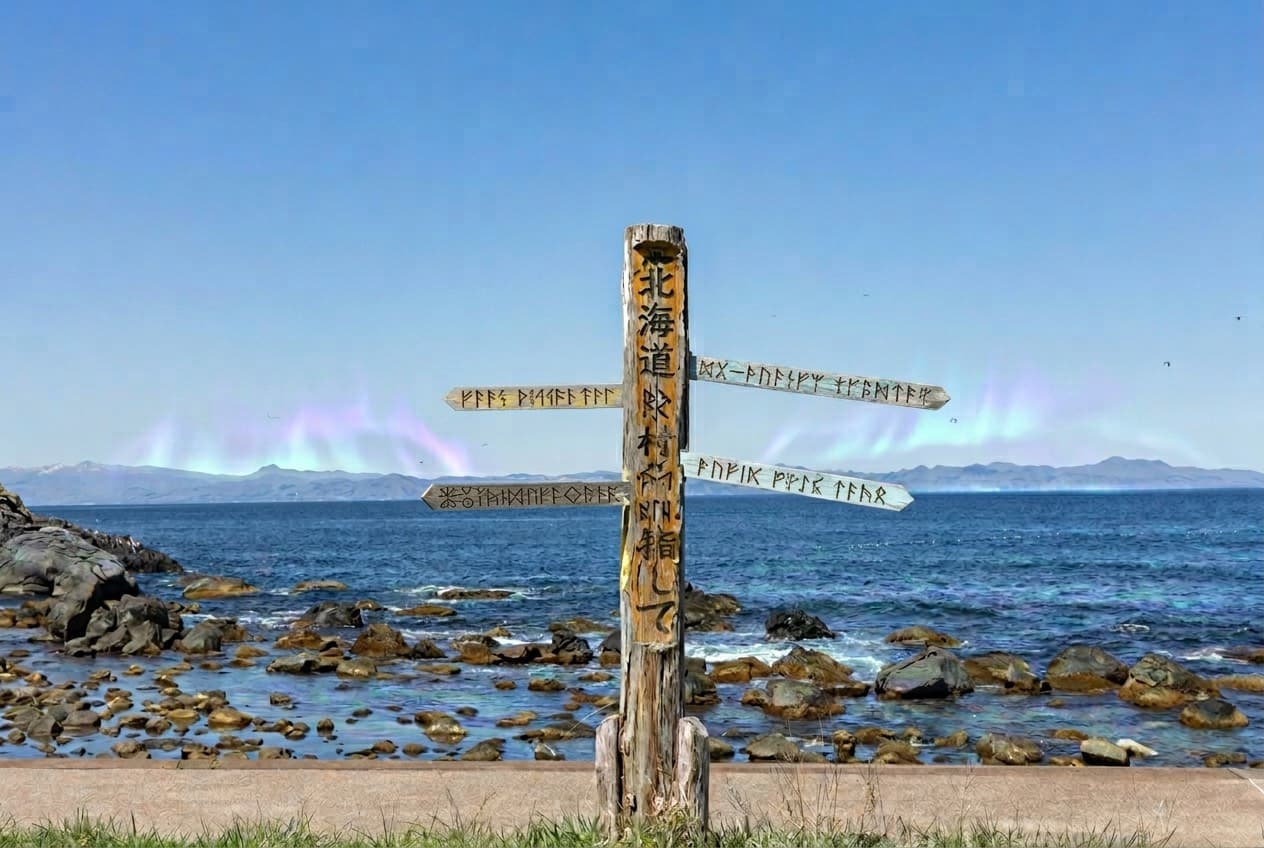
June · Autumn · Winter
June changes the local rhythm. Autumn sharpens the mountain light. Winter makes the entire region feel like a held breath. Every season changes the way the seam presents itself, but the place remains structurally the same: cold, rural, and quietly charged.
Field Fact
Factual Ground
Seasonality is one of the safest and strongest factual layers available for the Conduit hub. Public sources already frame the area through attractions, local timing, and the visible change in conditions across the year.
The Amazing AOMORI entry for Christ Park explicitly notes the Christ Festival as part of the public-facing identity of the site. That gives the page a clean reason to discuss timing, not as mystical scheduling, but as the practical reality of when local activity and visitor attention increase.
From a travel perspective, seasonal change affects visibility, road conditions, atmosphere, and the general texture of the visit. That is enough to support a long-form note without inventing suspicious quantitative claims.
Site Context
Observed Site Conditions
Summer gives the node its most publicly legible version: more movement, more daylight, easier travel, and the local festival frame that makes the legend visible in a sanctioned way.
Autumn is sharper and more austere. The landscape becomes cleaner in visual terms, which often makes the geography itself feel more structurally important than the attraction copy attached to it.
Winter changes the entire reading. Access becomes more conditional, the mood turns severe, and the same roads and fields can begin to feel less like scenery and more like an exposed system boundary.
Conduit Reading
Conduit Reading
In canon terms, the conduit does not switch on and off by season. What changes is the ease with which the site can be read. Summer externalizes the myth. Autumn clarifies it. Winter strips it down to structure.
That is the correct use of seasonal residue on the public site: do not claim that a season causes supernatural behavior. Instead, show how different environmental conditions make different parts of the same mythology more legible.
This keeps the note strong, atmospheric, and defensible. The seasonal pattern is factual. The interpretation is literary. The canon remains a layer placed beside the public record rather than masquerading as it.
Field Fact
This note should eventually combine real local data, place-specific references, and directly attributable context from public sources.
Conduit Reading
Interpretive language can stay strange, but it should read as canon or editorial theory, not as a literal municipal claim.
Reference Rule
Use official Shingo and Aomori sources firstSite Conditions
Topography, weather, distance from major hubs, and seasonal shifts are part of the note, not background decoration.
Canonical Read
Each field note should interpret the landscape as conduit behavior: residue, pattern, pressure, and threshold logic.
Target Depth
Each field note should eventually expand into an 800 to 1,600 word article with local references, images, and outbound links.
Sources